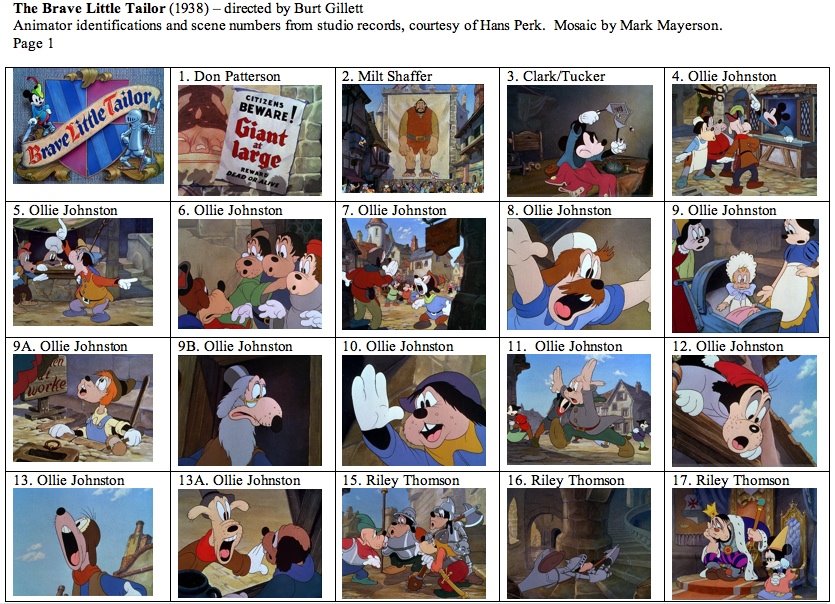
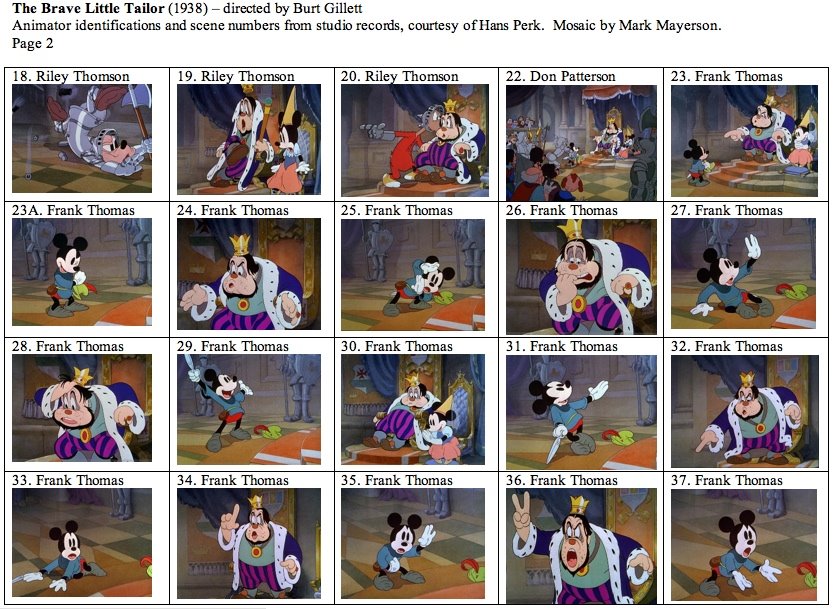


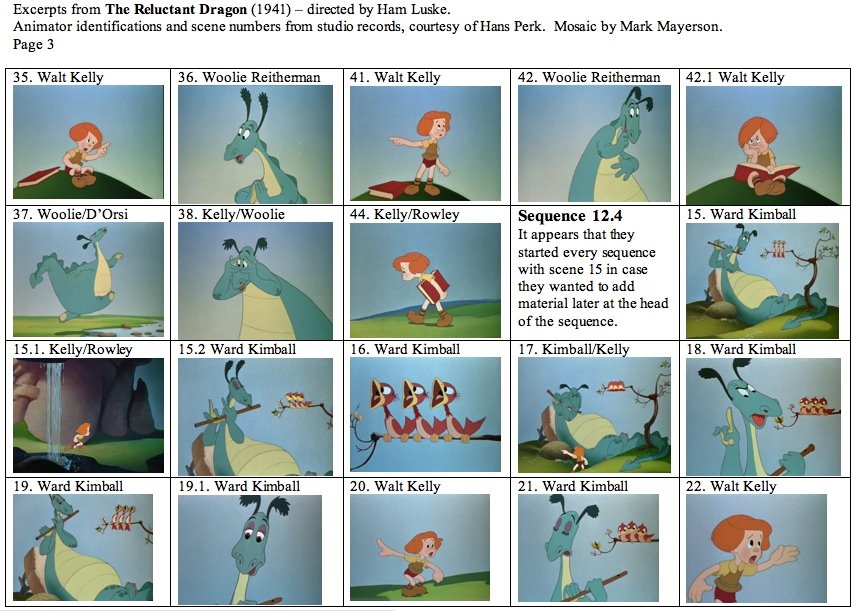
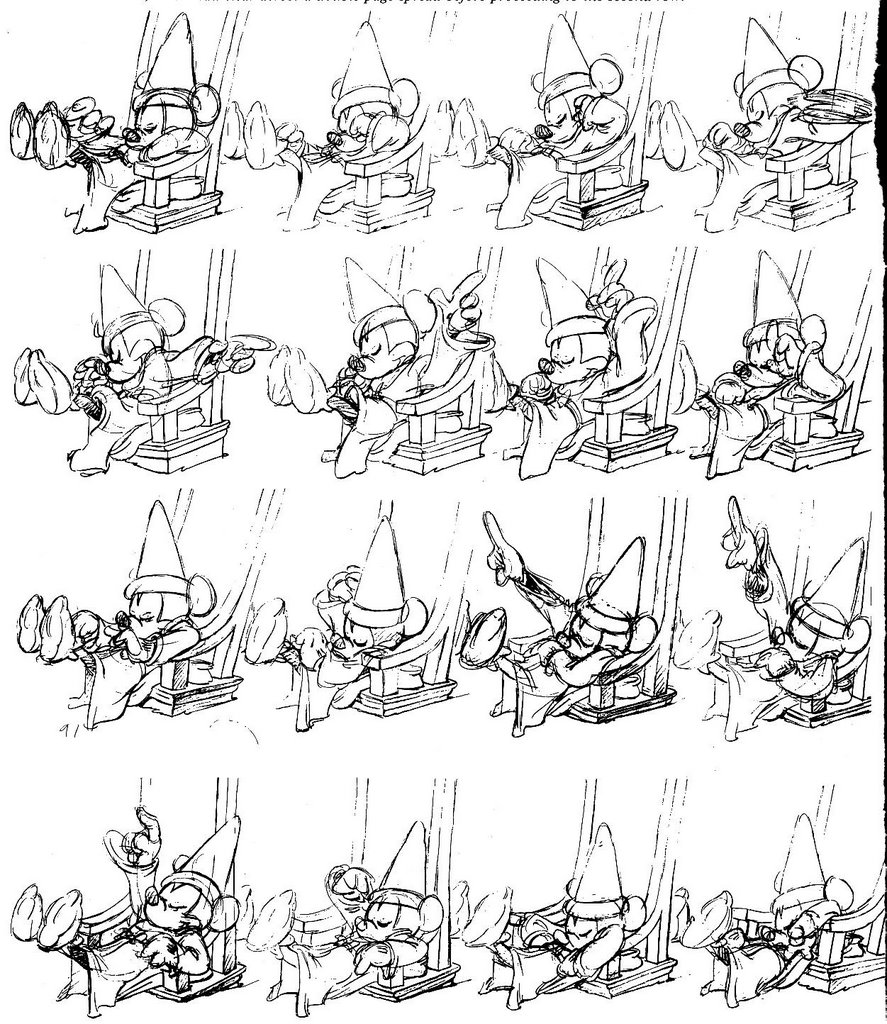
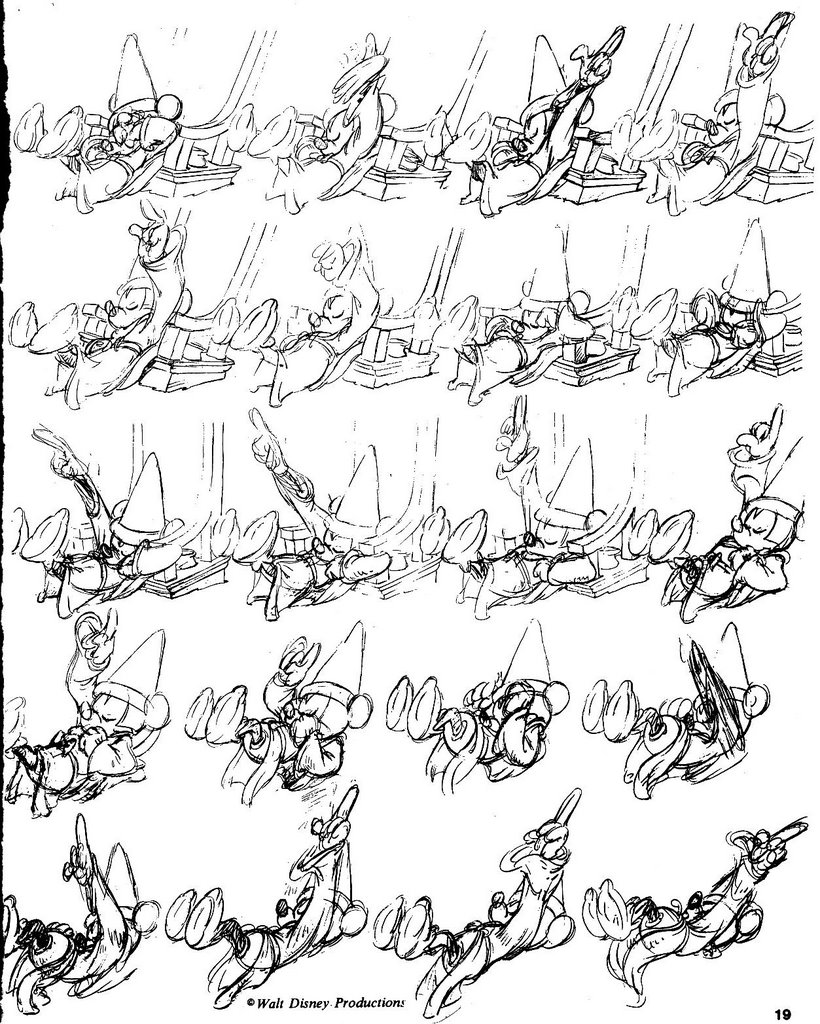
 Courtesy of Hans Perk, here's the animator breakdown for The Brave Little Tailor. More on this cartoon later.
Courtesy of Hans Perk, here's the animator breakdown for The Brave Little Tailor. More on this cartoon later.
Courtesy of Hans Perk, here's the animator breakdown for The Brave Little Tailor. More on this cartoon later.
What Mr. Lawrence really wants right now is for so many people to start talking about his comedy pilot now featured on YouTube that some network executive will decide, "Now I can pick this up and I won't look dumb."That sums up the situation nicely. It's not about the project, it's about not letting the gatekeeper look dumb.
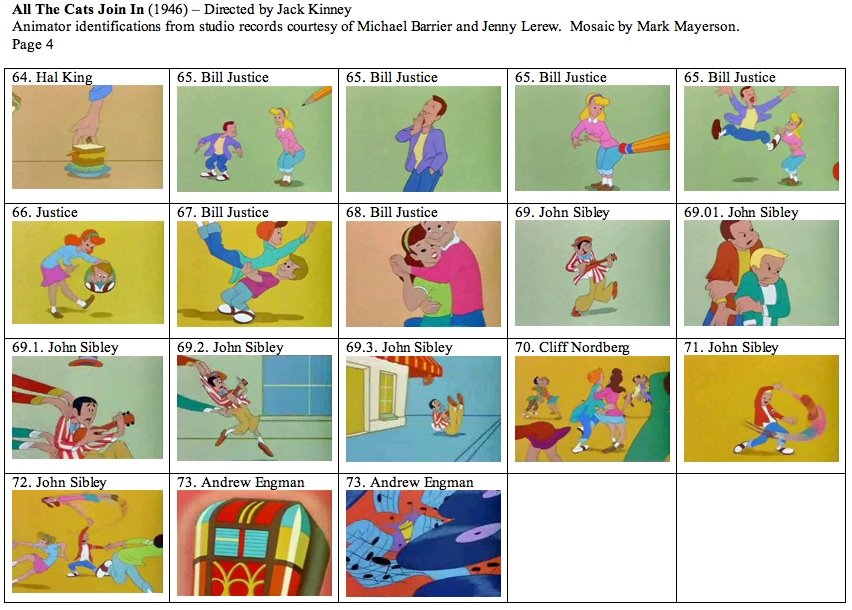
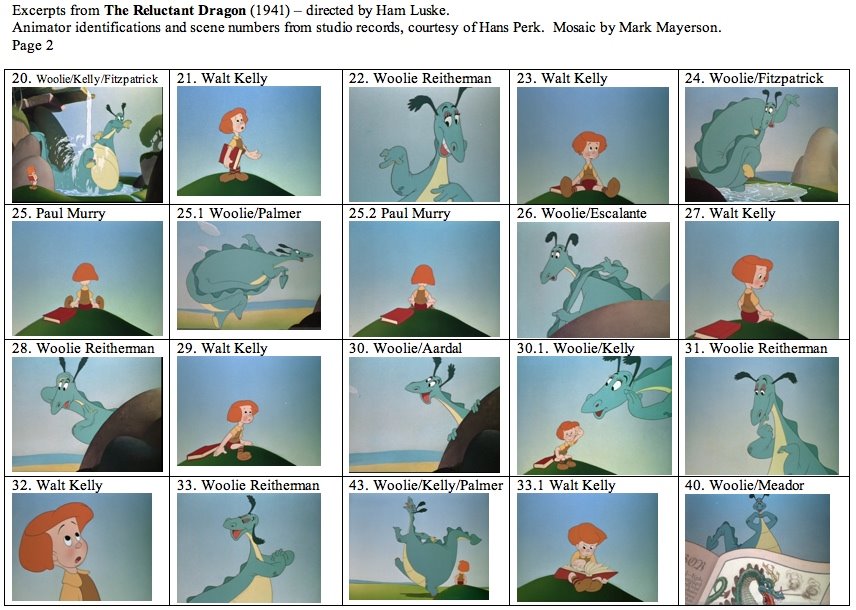
 I have to admit that I'm not a fan of Murry's comic book work. It always seemed lumpy and ungainly to me. He handles the animation of the boy well, but seems to have trouble with the boy's hair. It's not a great hair design, but in Murry's scenes it sometimes looks a little like a loose wig. I do have to say, though, that the boy turning around in scene 25 is a lovely piece of animation.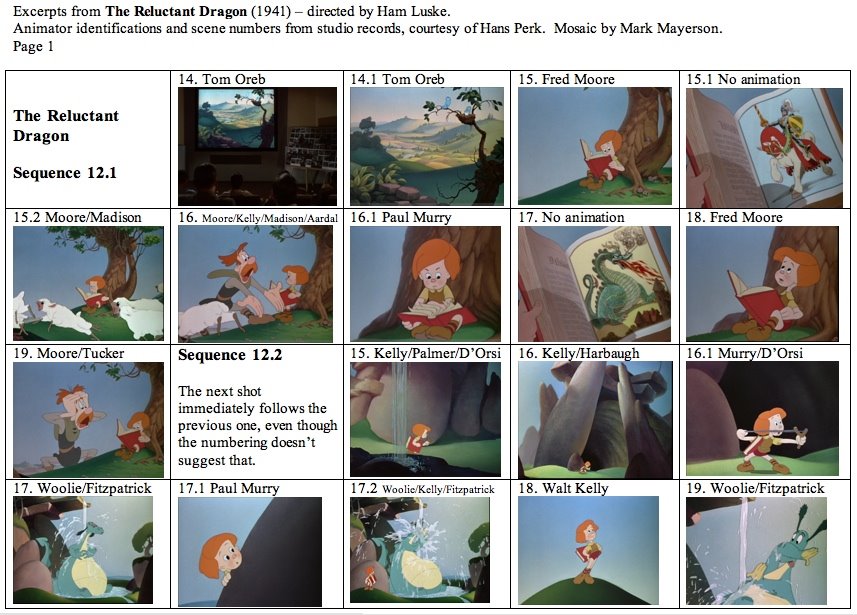

That's the big difference with digital distribution and webcomics -- there's no penalty to having a small readership. If you have a small readership, you have a small readership. But you get to keep it, because your work is always available. If you go into an average comics shop -- or even a Borders or Barnes and Noble, for all their tremendous variety and selection compared to previous eras -- it's a different situation. A comic which isn't expected to sell at least a few thousand right out of the gate will not be seen at all. It will never appear.It's the principle that any given square inch of shelf space needs to generate a certain amount of revenue for a shop to survive. And so the people who buy the material for that shelf quite reasonably try to skew their ordering toward those products that are going to sell to the highest number. And if you have five genres, and one sells to 40 percent of the fans, one to 30 percent, and one to 10 and one to five, etcetera, the one that sells to the 40 percent is going to take up 80 percent of those slots.
I just boil it down to: There's no shelf space in cyberspace.
There's limited "shelf space" in movie theaters and on TV and that's why there are gatekeepers to filter out what they think won't sell sufficiently well to make them a profit. The person or company who figures out how to make a profit from animation on the web is going to revolutionize the business and open it up for new creators.
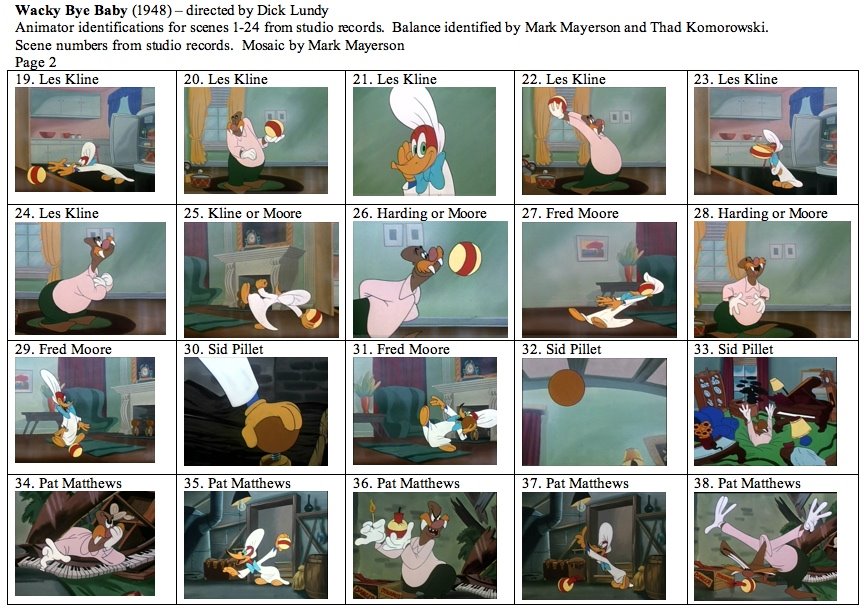
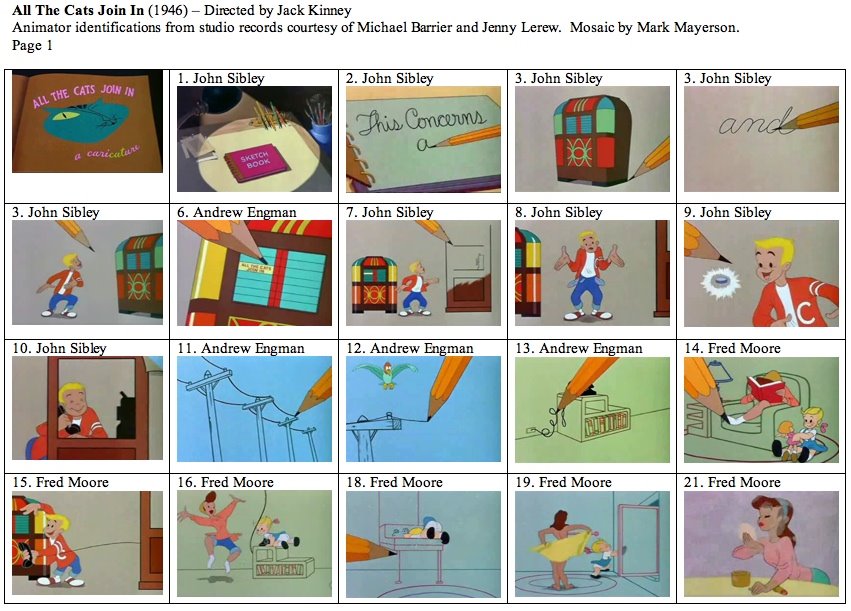
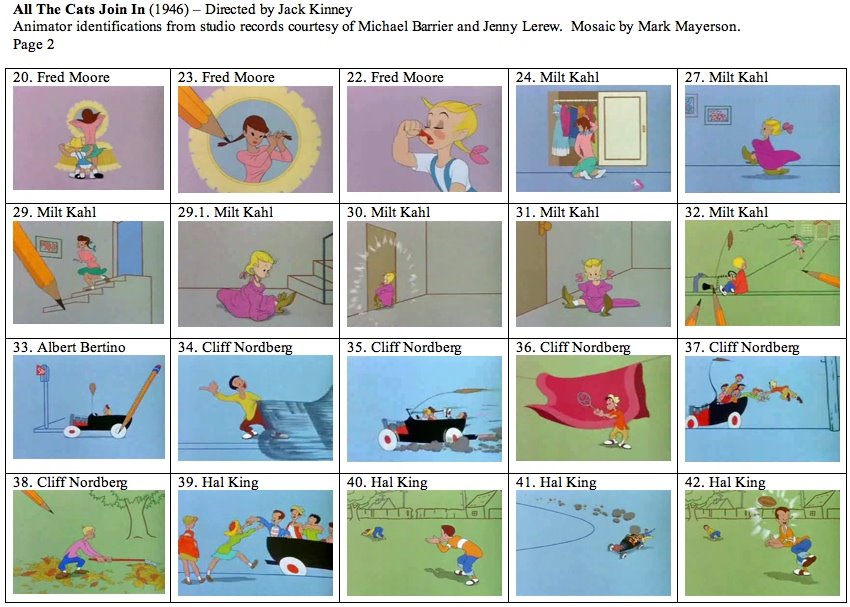
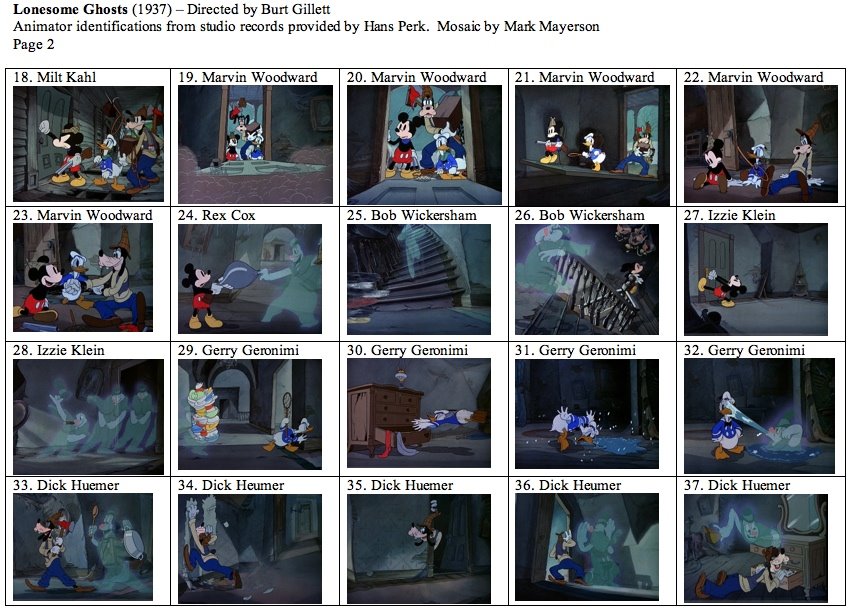
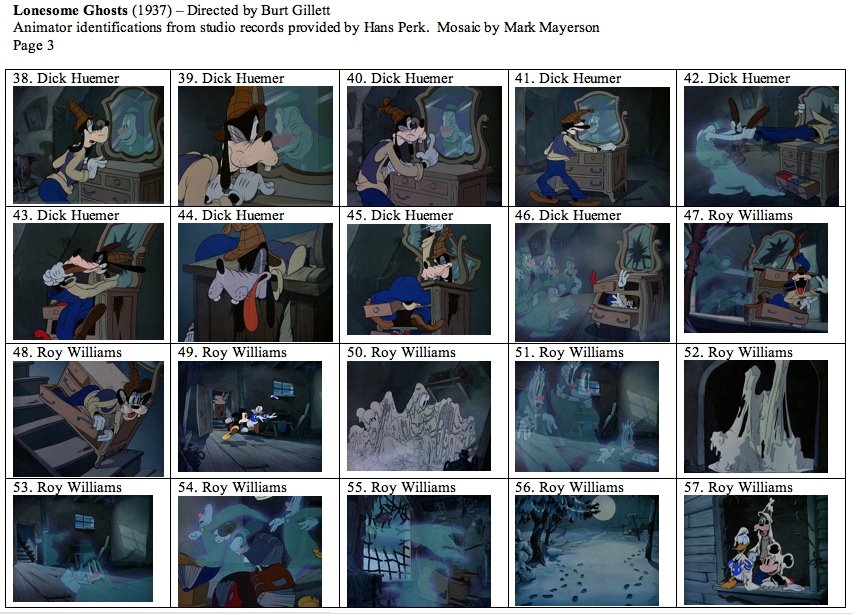
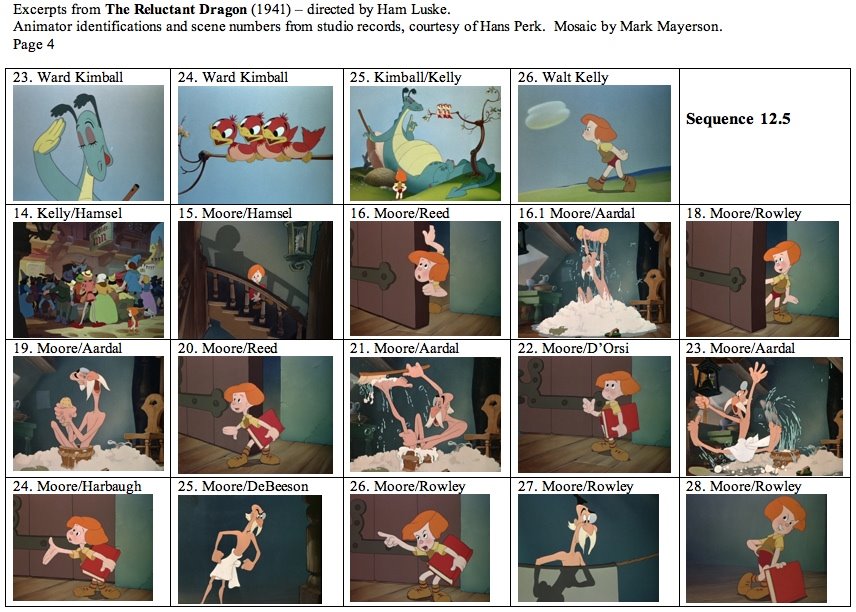
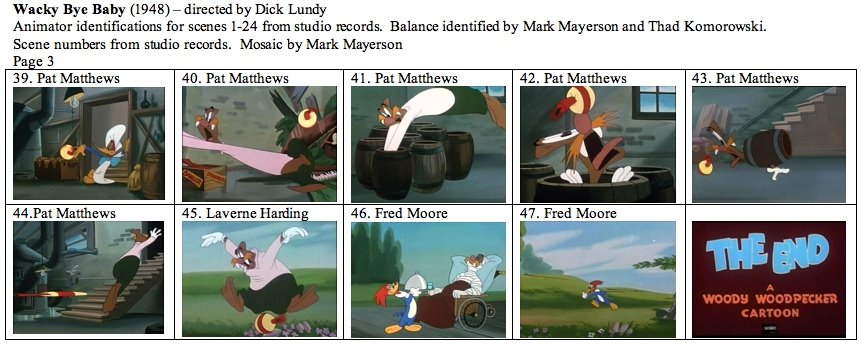 I've got the studio documentation for this cartoon, but for some reason, it doesn't include animator credits after scene 24. Clearly a studio oversight.
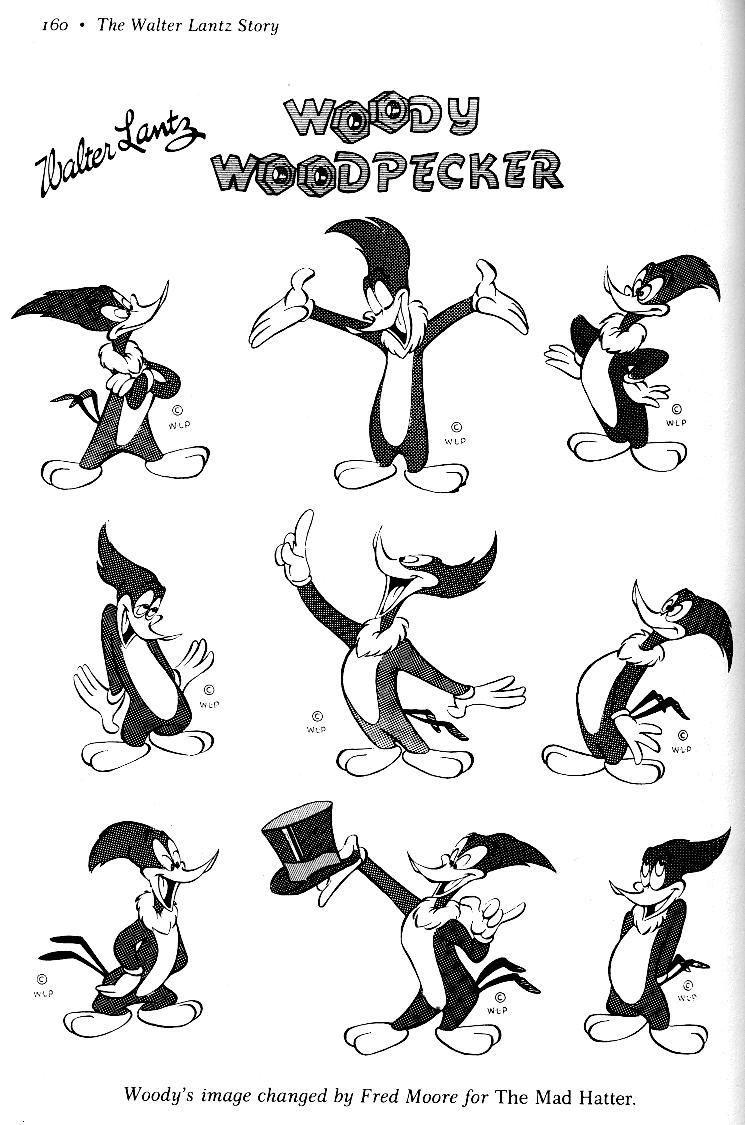 Fred Moore's late 1940's version of Woody, taken from The Walter Lantz Story by Joe Adamson. You can see Moore's work on Andy Panda here and here, courtesy of Thad K. And of course, for a large sampling of Moore's drawings, check out Jenny Lerew's Blackwing Diaries.


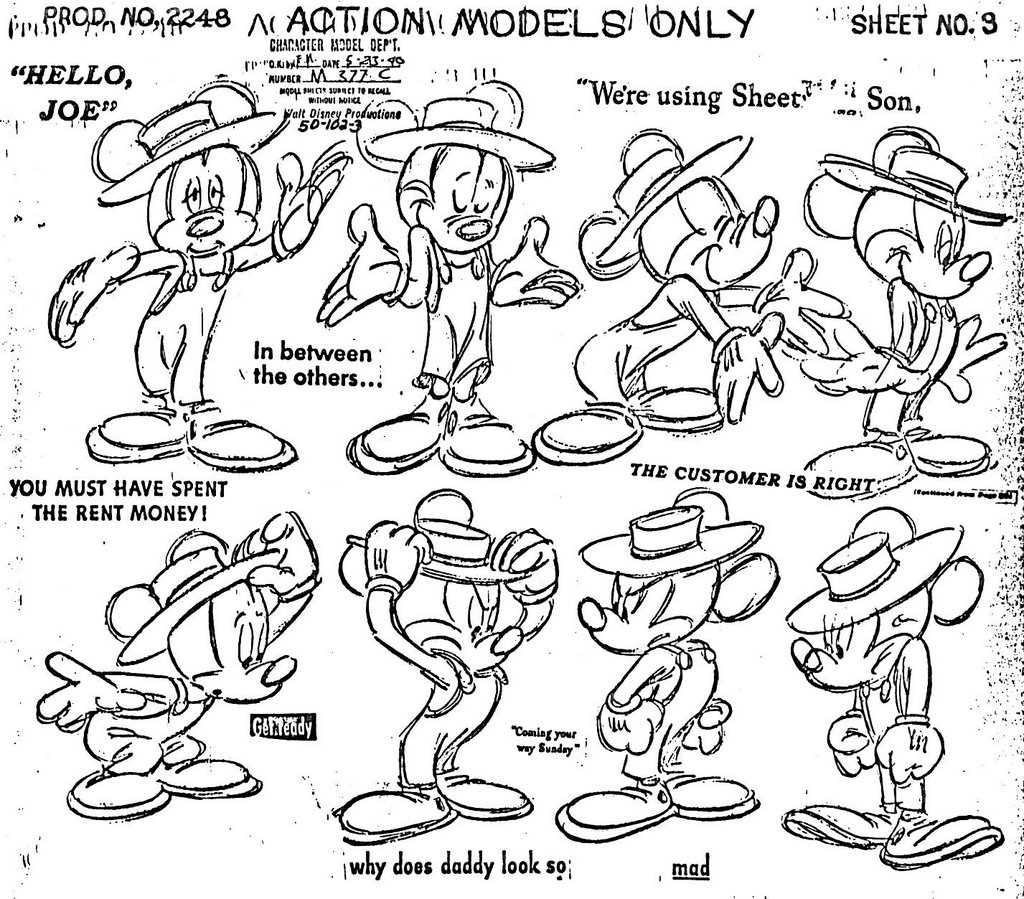
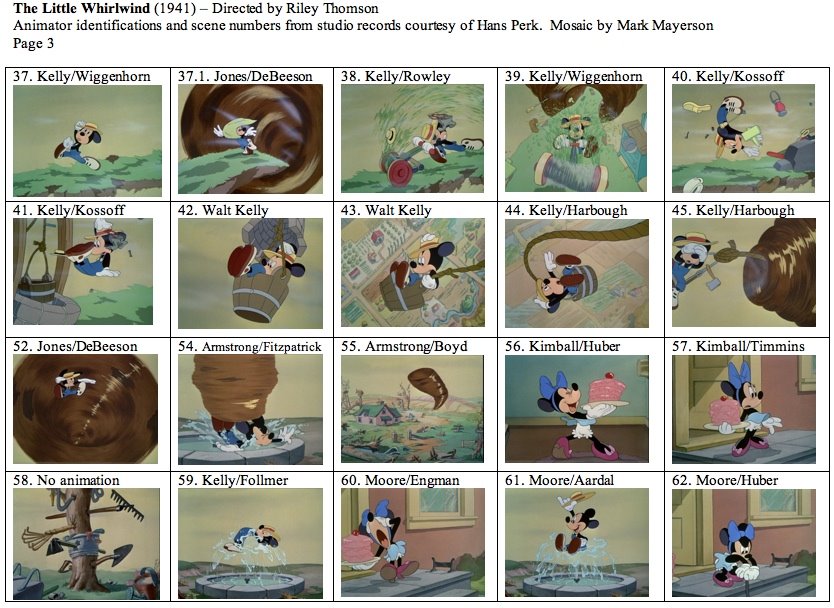
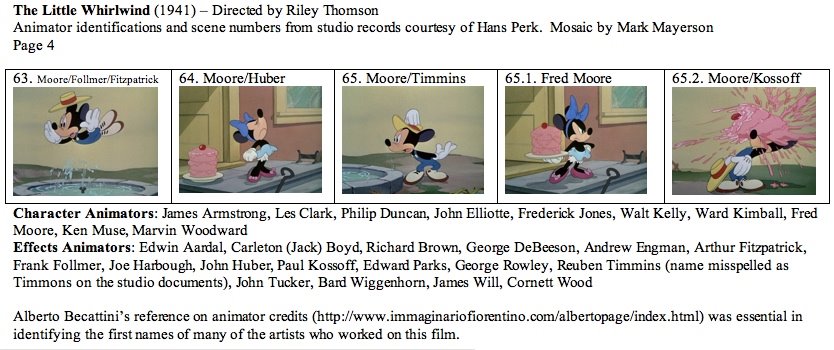
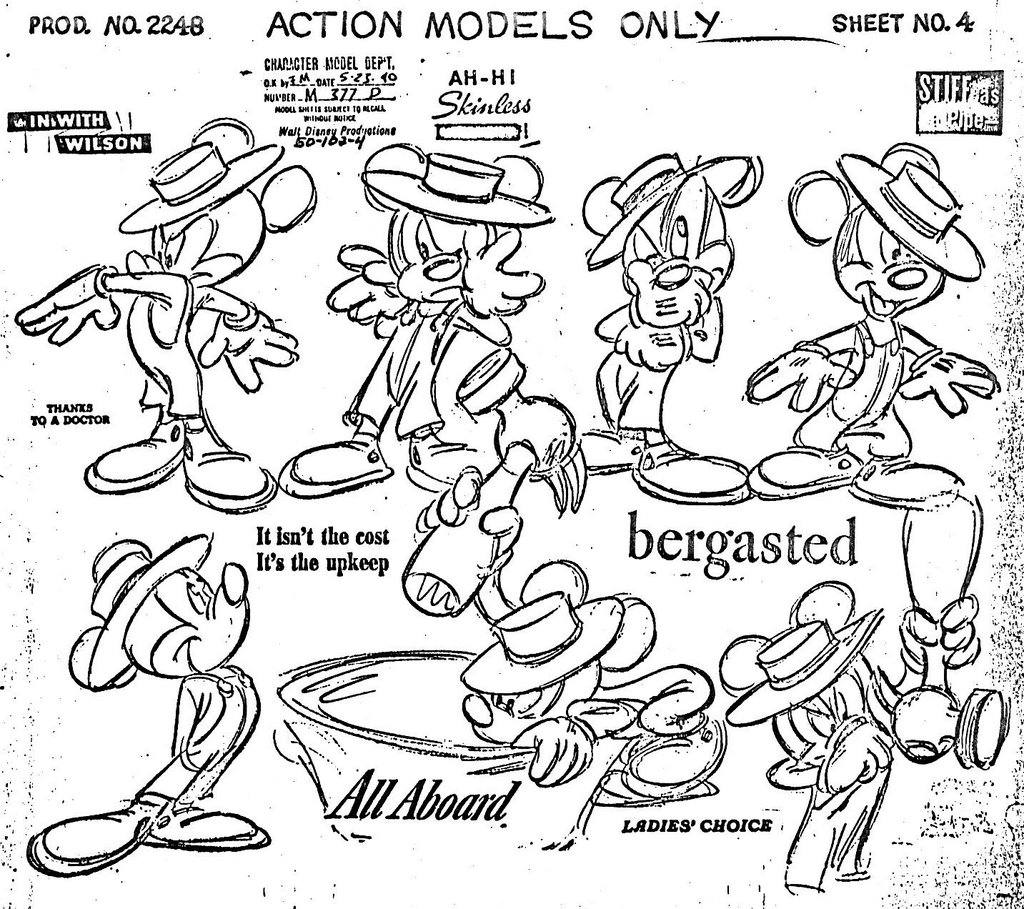 I suspect that many of you have copies of these model sheets (possibly better copies than those above). But if you are unfamiliar with these, they're drawings by Moore from scenes 16 and 18 of The Little Whirlwind.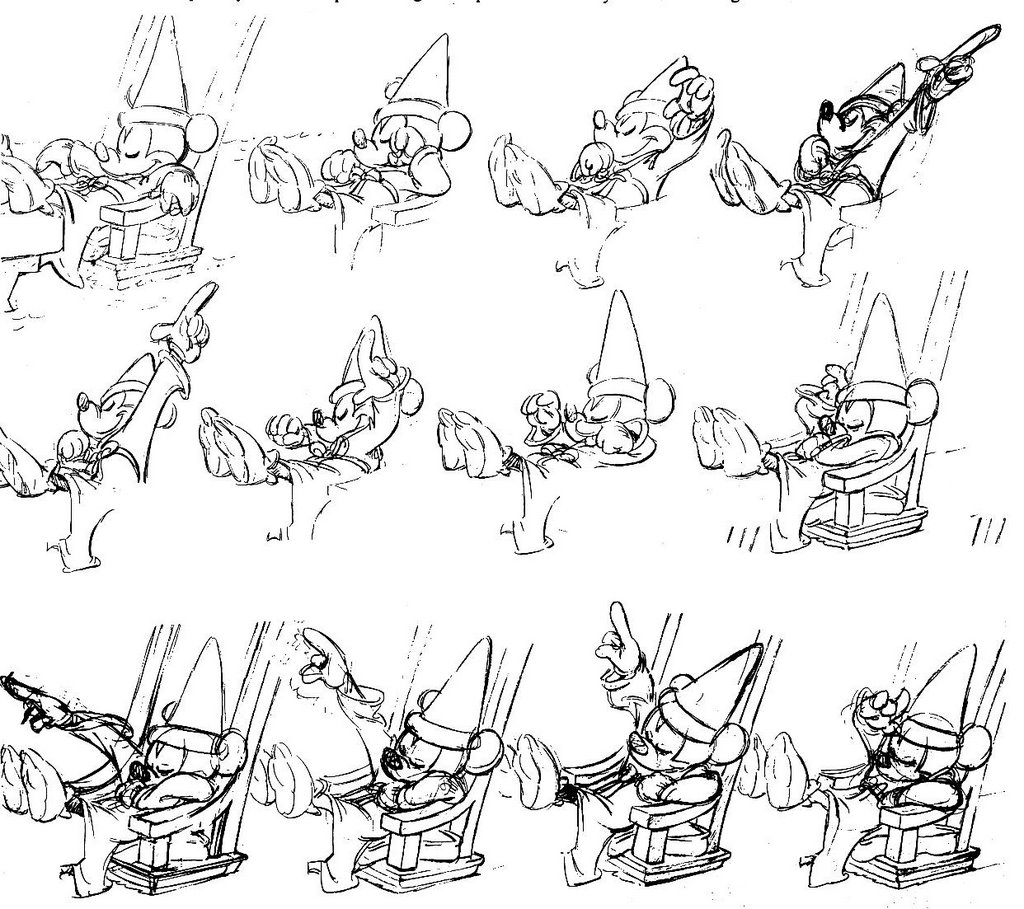
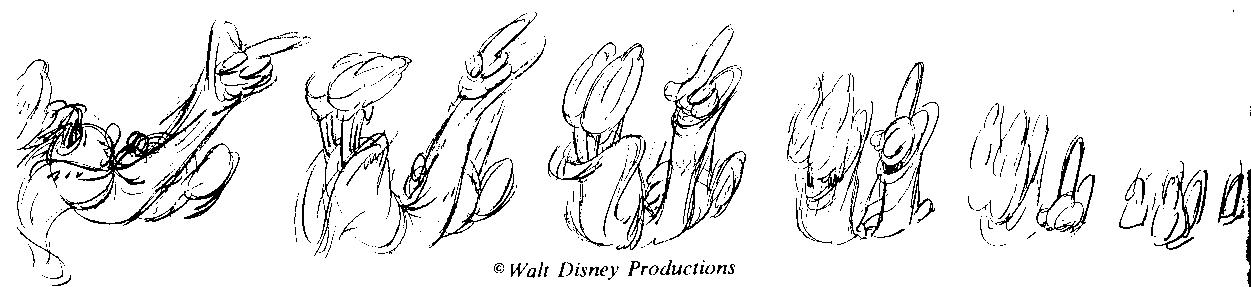
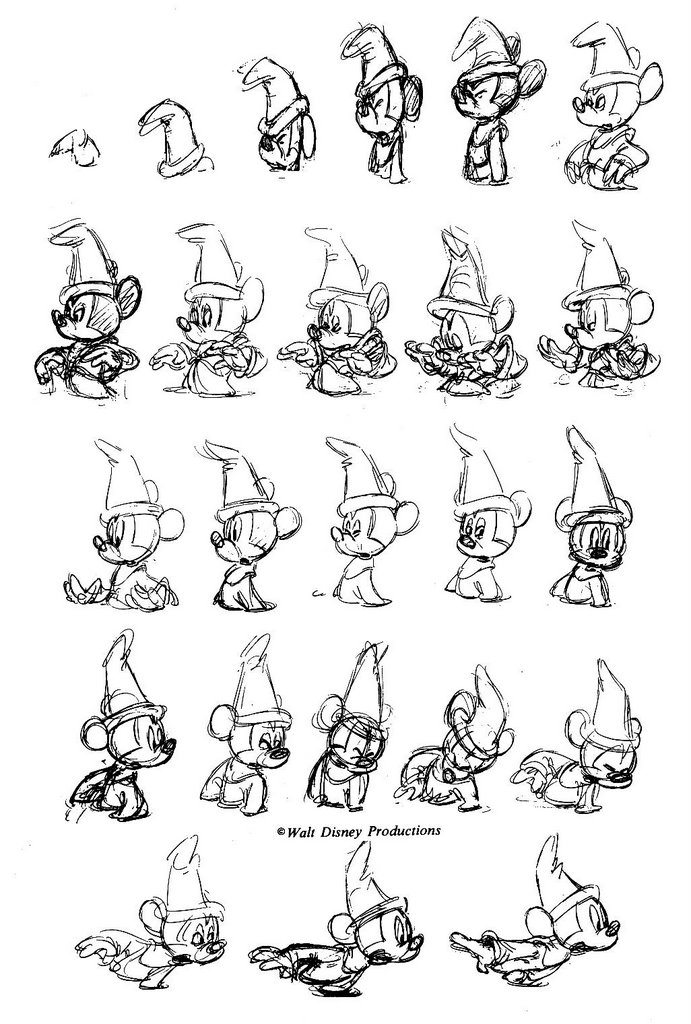
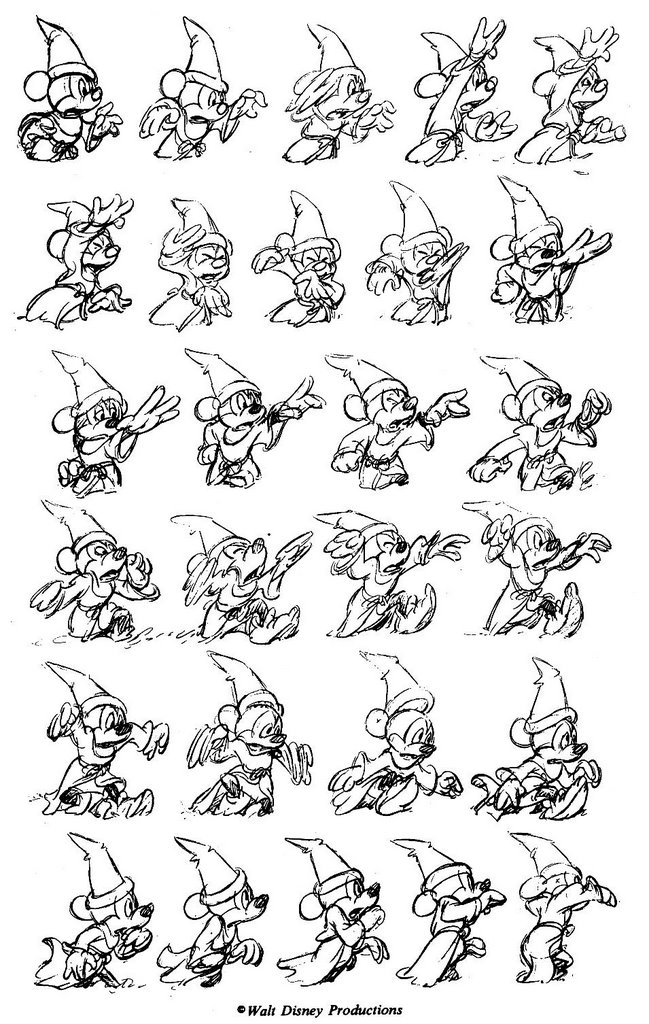

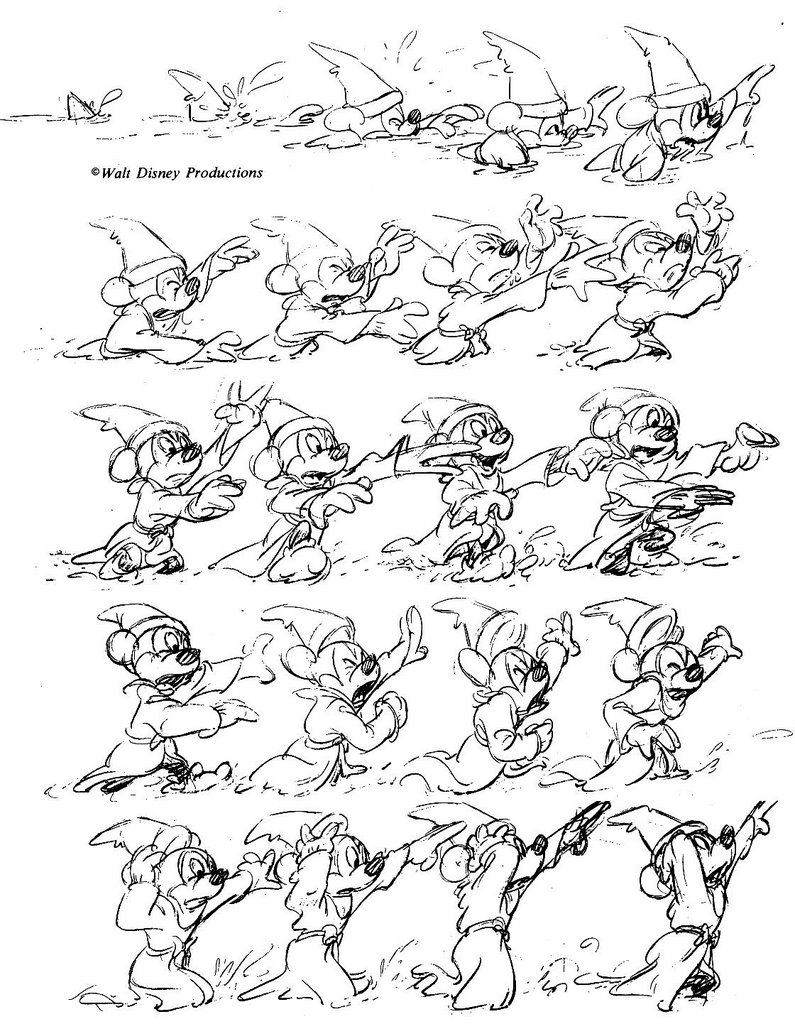 This comes from an issue of Cartoonist PROfiles, though I don't know which one. Space has always been at a premium here, and I've torn articles out of magazines for years in order to keep my files under control. I've been good lately at noting the titles and issue numbers of articles, but I neglected to do it for this piece. If anybody knows the issue number, please comment.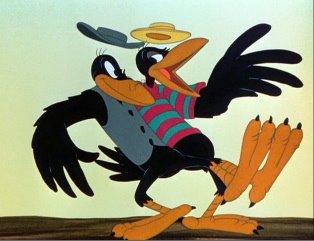
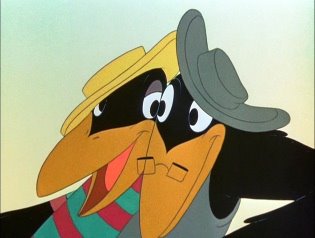
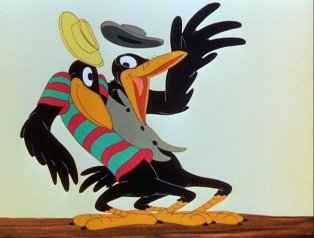

And they tell me that a man made a vegetable truck.For this section of the song, there are 5 or 6 voices on the soundtrack that the characters lip synch to, but there are only 3 crows on the screen! The crow with the striped shirt synchs to 2 or 3 voices, the deacon-ish crow synchs to 2 and the tubby crow synchs to one, but it's not the voice that he speaks with earlier in the film. Furthermore, when the film cuts from a long shot of the two crows to a close-up (see the top two images), the crows have reversed positions!
I didn't see that. I only heard.
Just to be sociable, I'll take your word.
I heard a fireside chat.
I saw a baseball bat.
And I just laughed till I thought I'd die.
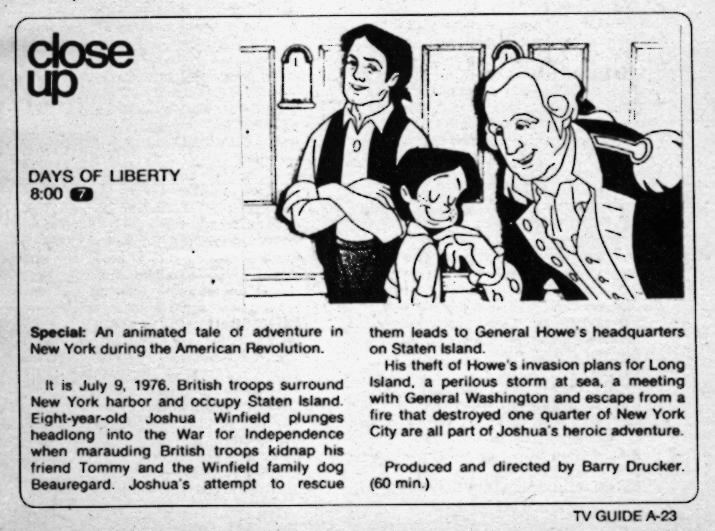 ...on June 7, I started working in the animation business at a hole-in-the-wall N.Y. studio called Teletactics. The project was a one hour TV special for the local ABC-TV station called Days of Liberty. On my first day they didn't have a scene ready for me, so I ended up doing inbetweens on a scene animated by John Canemaker, now the noted animation historian, teacher and Oscar winning short film maker. I'm sure that John would agree with me that Days of Liberty was nobody's finest hour.
 You'll probably be reading a lot about this today, but Warner Bros. and King Features have finally come to an agreement that will see the Popeye cartoons released on DVD starting in 2007.
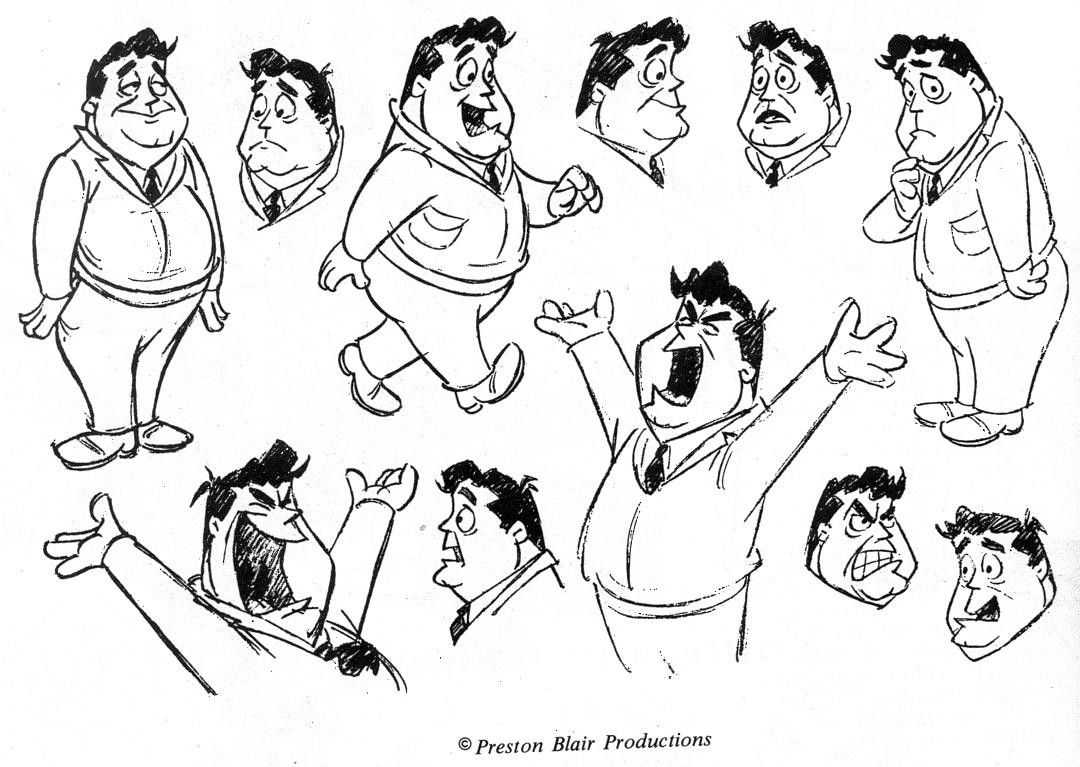
"We were given a portion of the picture, over a very rough scenario. Very, very sketchy, no storyboards like we have today, nothing like that. The scenario would probably be on a single sheet of paper, without any models, sketches or anything. You made it up as you went along. You were given a part of the picture and you did what you wanted. If it was a picture about ice-skating, you took a scene of somebody on ice skates and you used your own gags and made it all up."This was hardly conducive to consistent performances. Later on, with model sheets and storyboards, scripts were better worked out. However, the splitting of a performance between animators continued to occur. The only exceptions were the rare cartoons animated by a single person (Plane Crazy by Iwerks, Rabbit Rampage by Washam, etc.) and the occasional cartoon where one animator got all of a character, such as Tytla animating the giant in The Brave Little Tailor or Preston Blair's animation of Red in Avery's MGM cartoons.
"Television is on the precipice of an enormous re-evaluation, of how shows are made, how much they cost, who's watching and how they're watching. I think in the next five to ten years, television, as we know it, will have ceased to exist."
"Anybody who thinks they can tell you now how this is going to work is an idiot. No one knows. No one at the studios, no one at the networks, there is no writer/producer who has a clear sense. We're in virgin territory. It's going to take time to settle down. What do we do? Do we go back to making TV for as little as possible, with paper sets, and no locations? The public won't accept that. There's a very real problem here. I'm not clever enough to come up with a solution. But I'm fascinated to see what happens."Things are definitely breaking open on the distribution side. Treehouse, a Canadian pre-school cable channel will start TreehouseDirect in August, where you'll be able to download their shows. They're willing to distribute works by independent producers as well, as you can read in this press release.


 Posts
All Comments
Posts
All Comments