This sequence, on the surface, is fairly mundane. But it is a critical sequence in that it introduces the main characters and gives us a chance to get to know them in a relaxed way. It's also a very complicated sequence in terms of staging. There are many shots with three characters done by three separate animators. Getting them to work together and not upstage each other is a major logistical problem.
It's no surprise that this sequence was given to Wilfred Jackson. The Disney directors of the 1930's and of the features are not discussed much. That's probably because they served Walt Disney's point of view more than their own, so their personalities are never allowed to dominate. Still, Jackson was known for his meticulous attention to detail, including timing. He was the director of
The Band Concert, a short that had to match an intricate musical score and also had many threads to be woven together.
Here, Jackson makes the sequence look effortless. We never lose track of where the characters are or what they're feeling about the various events. Figaro and Cleo are successful comic relief characters, but Gepetto is critical to the success of the film as the relationship between him and Pinocchio is the centerpiece of the story. That relationship is what allows both characters to grow.
Jackson also juggles a large crew: Gepetto is animated by Babbitt, Moore and Thomas; Jiminy by Towsley, Anthony and Elliotte; Figaro by Larson, Bradbury and Calonious; Cleo by Larson, Lusk, and Karp. The animators are mostly cast by character, but there are still several animators per character whose work has to be coordinated and the resulting performances are seamless. You can see subtle differences when you know who animated a particular scene, but without the draft I'd never have noticed.
I think that Babbitt's Gepetto is his masterpiece, but that's probably because I prefer warmer characters. to cold ones like Babbitt's Queen in
Snow White. Christian Rub's voice for Gepetto is great and Babbitt builds on it to make Gepetto a very grandfatherly figure, full of enthusiasm and a sense of fun. Moore's two Gepetto scenes are somewhat livelier than Babbitt's and are well placed in the sequence. Frank Thomas's Gepetto is an afterthought in his scenes, which are all about introducing Pinocchio as a puppet. Thomas has the unenviable task of animating a dead character and still make the motion appealing, something that he succeeds in doing. However, I think that the film missed a bet here. Gepetto is literally an animator, bringing Pinocchio to life, and rather than focus on Pinocchio it would have been nice to see Gepetto’s pleasure at watching Pinocchio move. Perhaps that was a little too self-referential for the studio.
One of the most impressive things about this sequence is Disney's bench strength. Don Towsley is not talked about much, but his handling of Jiminy here is excellent. He retains the character's charm from the first sequence and the reaction shots keep him in the picture even though he's reduced to an observer for most of the time. Scene 3.1 is a beautiful piece of action animation as Jiminy launches himself away from Pinocchio. The gag in 33.1, where Jiminy pretends to be a mechanical figure on the music box to escape detection is lifted from Chaplin's
The Circus, if anyone cares. Towsley's no slouch in the acting department, either. His reaction shots and shots commenting on the action are all convincingly in character.
The Jiminy scenes taken by Dick Anthony or John Elliotte are equally well done. Anthony's gag with Jiminy's hand on a woman figurine's rump has very strong poses. Elliotte's animation in 19.1, reacting to the stern-looking pipe, contains wonderful contrast in facial expressions. We always associate Jiminy with Ward Kimball, but Kimball is completely absent from this sequence and we don't feel his loss.
Eric Larson creates a great character in Figaro. The cat is cute, but has definite dislikes and is easily annoyed, giving him a well-rounded personality. Frank Thomas contributes some good scenes of Figaro interacting with the Pinocchio puppet.
Jack Bradbury is another unsung animator who is probably better known for his comic book work than for his animation. Yet scene 81, where Figaro opens the window, is by Bradbury and it's a great piece of physical action that's completely believable with no cheats.
Don Patterson does all the clocks and their gags. It's one of the few times you'd be complimenting an animator by describing his work as mechanical.
I'm not qualified to talk about colour and backgrounds, but I do want to point out how theatrical the set lighting is. Looking at a scene like 2.1, 25 or 85, you can see how the backgrounds have been lit as if with spotlights, creating staging areas for the characters to operate in.
From the standpoint of story, Pinocchio is without life in this sequence except for what Gepetto imparts. We care about him due to his design, courtesy of Milt Kahl, but also due to the care that Gepetto takes in crafting Pinocchio. Gepetto's clocks are more evidence of his abilities and played for laughs, but remember them because they're a key to his character and I'll be saying more about them in the future.
Note also that Gepetto uses Pinocchio to kick the cat. That small piece of vicarious cruelty never reoccurs, but it's another clue to Gepetto's background.
There's an expressionistic shot where a camera move links up the wishing star outside Gepetto's window and Gepetto in bed (scene 83), reinforcing the scene from the first sequence where the camera cranes down from the star to Gepetto's workshop. As the blue fairy will soon arrive, this reminder of the connection of heavenly power and Gepetto sets up what will follow in the next sequence.


 Pinocchio comes across as naive and pleasant in this sequence, but he really has nothing to do except ask questions. Certainly Johnston and Kahl make the character visually appealing, but there are limited acting opportunities here.


 I strongly suspect that there are inaccuracies in the draft for this sequence. It surprises me that Art Babbitt would be credited with the Blue Fairy for scene 21 and that Berny Wolf would be credited for her in scene 45. I would guess those scenes would be by Campbell, but maybe I'm wrong.


 I've been aware of the existence of Machinima for a while, but as I'm not into video games, I haven't bothered to search any out. If you're not aware, Machinima are films where the visuals have been created using videogame graphics.
 This is a new book that I was completely unaware of. Halas and Batchelor were, for years, the leading British animation studio. They were the first British studio to do a feature, Animal Farm, and did other features as well, including one of a Gilbert and Sullivan operetta called Ruddigore. The book also includes a DVD, though I'm not sure what the contents are.


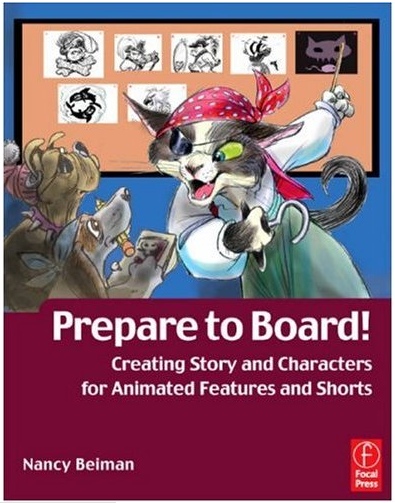 Nancy Beiman has created a commercial for her new book, Prepare to Board! The book is scheduled for release on March 2 and is up for pre-order at Amazon.com.

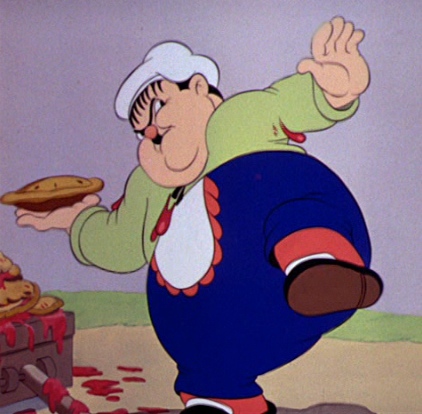 In Klein's drawing, the lines keep getting stopped by changes in direction. They're short and they tend to bump into other lines. The body parts don't feel tied together because the linework doesn't flow between them. A good assistant animator could clean-sheet this drawing, push the pose a bit and use a rhythmic line to improve this significantly.
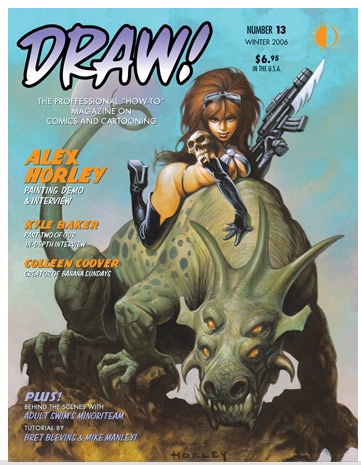 The new issue of Draw is out and it contains part 2 of an interview with cartoonist Kyle Baker. Baker is one of the more entrepreneurial creators out there, self publishing work like The Bakers and he's in progress on a graphic novel based on Nat Turner.
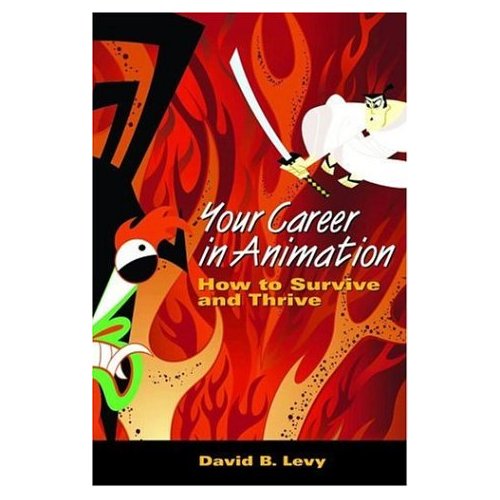 Your Career in Animation by David B. Levy was published last year but I've only just gotten around to reading it. I'm sorry that I didn't get to it earlier, as Levy was at the Ottawa Festival last September and I would have liked to compliment him on this book.
 Posts
Posts


